
In memoryCoracle fisherman, Afon Tywi
Andrew Davies
A life connected to the River Tywi
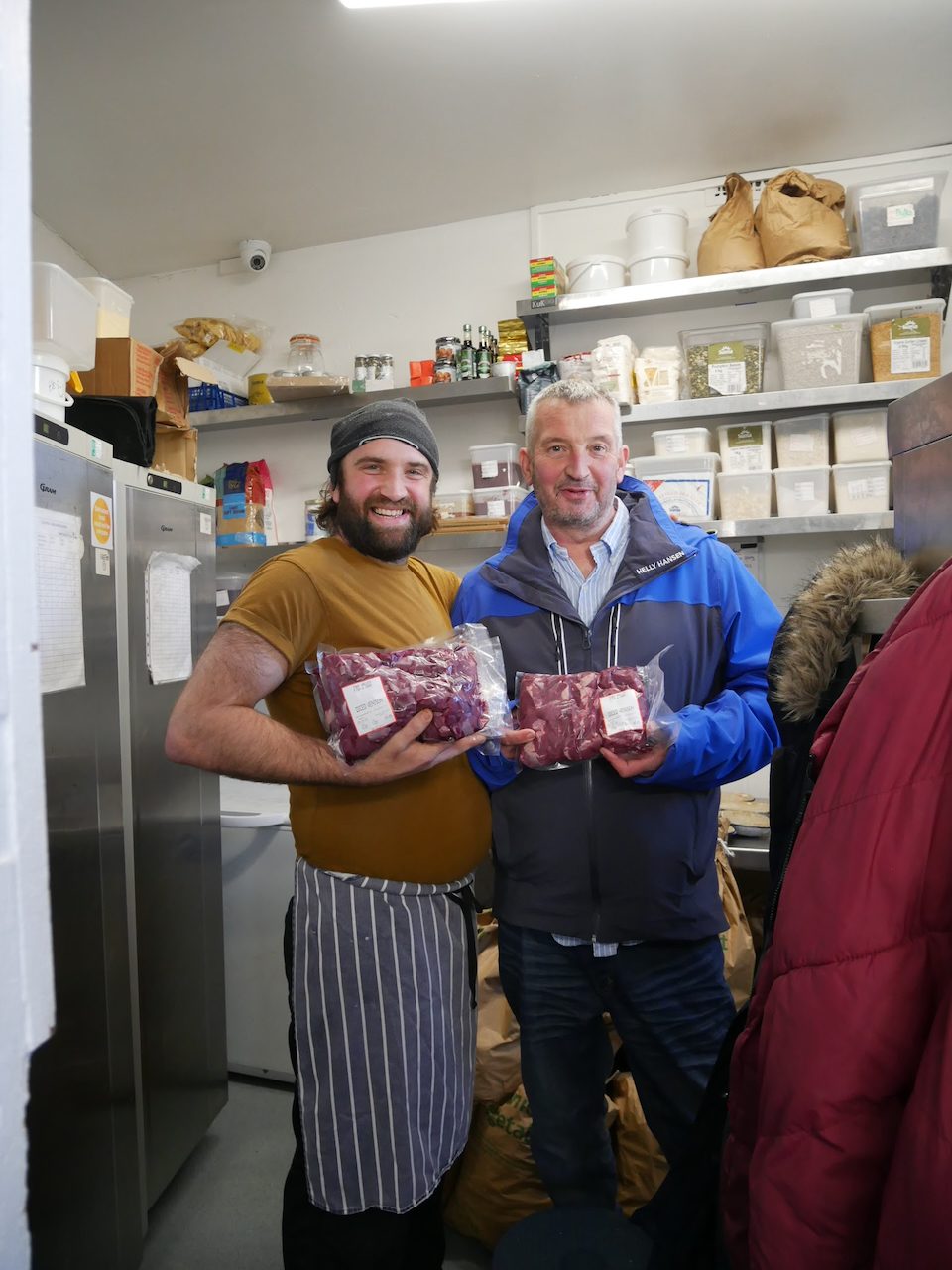
Coracle fisherman, chairman of the Carmarthen Coracle and Netsmen’s Association, and our friend and supplier for over ten years.
Watch Andrew in Yma o HydThe filmYma o Hyd, 2026
Meet Andrew on the river
Yma o Hyd means “still here”. It follows the coracle men and netsmen of Carmarthenshire on the river, and Andrew is in it. If you never met him, this is the best way to.
Remembering Andrew
Ten years and more
We knew Andrew for well over ten years. He supplied us with wild venison, fish caught straight off his own boat, and plenty more besides.
He was a genuinely beautiful, kind-hearted man, with an extraordinary connection to the River Tywi. Andrew came in to share his stories with our volunteers over lunch just last month, it was a special moment I'm proud he shared with us all.
Andrew died suddenly in October 2026. Our thoughts are with his family, and with everyone on the river who fished alongside him.
Rest in peace, Andrew.
The coracle men
The ancient art of coracle fishing
A coracle is a small round boat for one person, light enough to carry home on your back. On the Tywi they were built from ash laths with a woven hazel rim, and since the 1970s many have been made of fibreglass. They have fished this river for centuries.
The coracle men fish in pairs, at night, through the summer season. Two coracles drift down the river with a net held between them. Each man holds the net in one hand and paddles with the other, a figure of eight with a single paddle. When a fish hits the net the two boats are drawn together and the net is closed. It takes years to learn: the tides, the light, the colour of the water, and where the sewin and salmon run.
In the 1860s around 400 coracle men worked the Tywi. By 1935 there were twelve pairs. Coracle fishing now survives in Britain only on the Tywi, the Teifi and the Taf, and when Andrew spoke to the BBC in August 2026, only four licences had been taken out on the Tywi that season, against twelve when he started.
Andrew was chairman of the Carmarthen Coracle and Netsmen’s Association, which has looked after the fishery since 1938. What its members know is not written down anywhere. It passes down families and from one pair of hands to the next, and it only lasts as long as there are fish in the river and people on the water to learn it. Research from two years spent with the Association warns that the river’s decline, and rules meant to protect what is left, are turning a working fishery into a heritage display.
Photographs
Andrew and the river
Afon Tywi
A river under pressure
“When I first started, this river was black with fish.” That was Andrew, talking to the BBC in August 2026. He had fished the Tywi for 38 years and had never known a season like it. He reckoned the four coracle men on the river had caught twelve fish between them all summer, when a few years before you could catch that many in a night.
Salmon and sewin, the sea trout this river is famous for, are disappearing from the Tywi. Last summer Carmarthen’s mayor said the river was dying, and the Tywi River Festival was called off because of pollution.
-
Farming
Slurry and fertiliser wash off fields into streams and on into the river, feeding algae and stripping the water of oxygen. Volunteers testing the Tywi, including the campaign group Achub y Tywi, have found signs of farm waste.
-
Sewage
Storm overflows still put untreated sewage into Welsh rivers after heavy rain. Welsh Water says it will spend £889m on storm overflows between 2025 and 2030, with six projects on the Tywi.
-
Industry
The same volunteer testing found signs of industrial waste, and Natural Resources Wales has been investigating pollution claims on the river.
-
Lost habitat
Banks trampled bare, gravel beds choked with silt, and weirs and culverts that stop fish reaching the streams where they breed.
-
A changing climate
Warmer, lower summer rivers hold less oxygen, and salmon are finding it harder to survive at sea as well.
This is not only about fish numbers. When the fish go, so does everything that lived alongside them: the otters and the herons, the coracle men and what they know, and a local food that has fed this town for centuries.
What Andrew saw
Listen to the people on the water
Andrew spent nearly four decades on the Tywi, most of it at night, watching the water. He saw the river change long before any report said so, and he kept saying it. He and the other fishermen reported pollution to Natural Resources Wales again and again, and he told the BBC that nothing seemed to be done.
In August 2026 he travelled to Kodiak Island in Alaska with fellow coracle man Len Walters, through the Coastal TALES project, to meet Alutiiq fishing families facing the same questions on their own waters, and to show Yma o Hyd to an audience for the first time.
People who spend their lives on a river know it in a way no survey can. They notice the first warm summer, the first green water, the first year the sewin do not come. If we want to keep the Tywi alive, we have to listen to them while they are still on it.
What you can do
The river is still here. So are we.
Andrew would rather you did something than felt sad. Here is where to start.
-
Report pollution
How to report an incidentDead fish, discoloured water, foam, a smell of sewage: ring Natural Resources Wales straight away, day or night, on 0300 065 3000. Every report goes on the record, and the record is what gets action.
-
Follow the river’s recovery
Four Rivers for LIFEFour Rivers for LIFE, led by Natural Resources Wales, is restoring the Tywi, Teifi, Cleddau and Usk: fencing riverbanks, clearing barriers so fish can get upstream, and working with farmers to keep pollution out of the water.
-
Tell your Member of the Senedd
Find your Member of the SeneddRiver pollution in Wales is a Senedd decision. A short note saying the Tywi matters to you, and why, is read more often than you would think.
-
Keep the coracles on the water
The Coracle SocietyThe Coracle Society supports the last coracle fisheries in Britain, the Tywi’s among them. Join, go to a regatta, or have a go yourself.
-
Watch the film, and share this page
The more people who know what is happening to the Tywi, the harder it is to ignore. Send Yma o Hyd to someone who has never seen a coracle.
The bookComing soon
A book is on its way
We will put the details here as soon as it is published.
Further reading
- Yma o Hyd: The Ancient Art of Fishing in Wales Flytrap Films, 2026, on YouTube
- How a polluted river could end 300 years of coracle fishing BBC News, August 2026
- Still here: Welsh coraclemen meet Alutiiq fishers Coastal TALES, October 2026
- From Practice to Artefact: Heritage Licensing and the Ontology of Coracle Net Fishing in Wales Gareth Thomas, Louise Steel and Luci Attala, Humans, 2026
- Carmarthen Coracle and Netsmen’s Association The Coracle Society
- Four Rivers for LIFE Natural Resources Wales
- Know your rivers: salmon and sea trout catchment summaries Natural Resources Wales